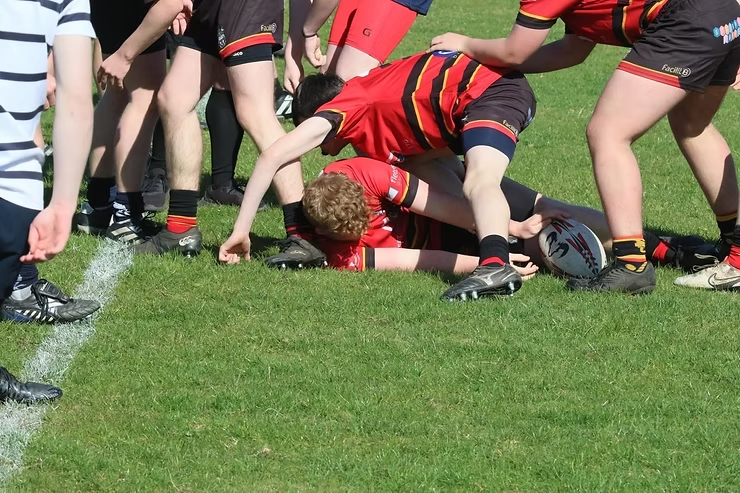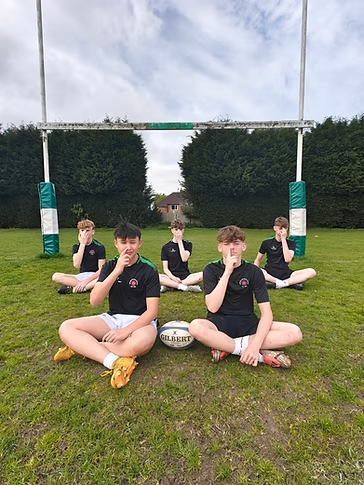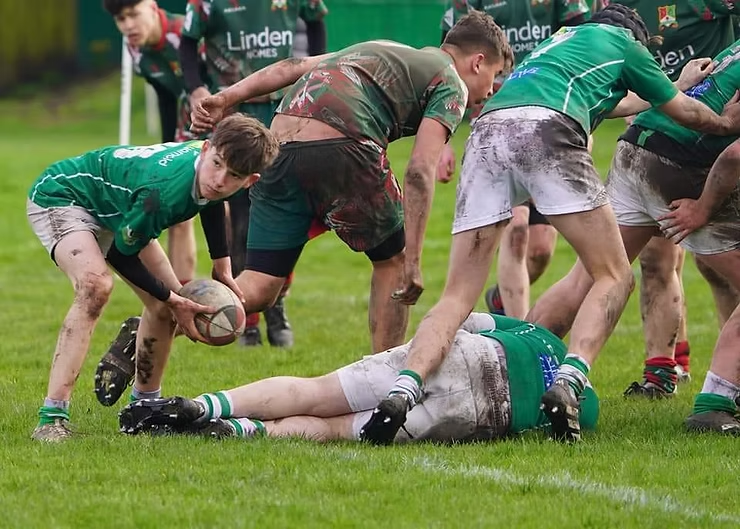
Rugby is a game of collisions, speed, and physical unpredictability — which is why the question how to prevent injuries in rugby is so central to coaches, players and support staff. Most injury-prevention programmes focus on strength, tackling technique or recovery protocols. But what often gets less attention is body awareness — the athlete's internal sense of how they move, align and respond in dynamic situations.
At ForceField, we believe that body awareness is a critical missing link in injury prevention. When players are simply reacting instinctively rather than feeling and controlling their body in space, small mis-alignments turn into big problems: sprains, muscle tears, even head and neck injuries. By combining the latest research with practical tools, we show how awareness of posture, movement and nervous-system state can make a real difference.
Why Body Awareness Matters for Injury Prevention
Body awareness (sometimes called proprioception or kinaesthetic awareness) refers to the internal sensing of joint position, muscle tension, body alignment and movement rhythm. In rugby, where athletes are under fatigue, reactive stress, and collision forces, that internal awareness becomes critical. For example, the University of Bath's work on the injury-prevention programme Activate found that teams which adhered to the warm-up and movement control exercises had significantly fewer injuries.
But beyond just warm-ups, awareness allows athletes to sense early breaks in form or increasing fatigue, adjust automatically, and avoid loading vulnerable tissues. Another dimension: when players lose body awareness under fatigue or stress, neck/shoulder posture deteriorates, core stability worsens, and the risk of collision-related injury (especially to head, neck or shoulders) increases. Smart athletes use awareness to maintain safe posture even at speed.
In short, focusing on how you move, what you feel, and how you control your body in space helps prevent injuries in rugby in a way that goes beyond just "get stronger".
Research Highlights Supporting Body Awareness Strategies
- Movement-control warm-ups: The Bath/Activate research showed up to ~23% fewer match injuries and ~59% fewer training injuries when implemented regularly.
- Behaviour change in coaches and players: Adoption of injury-prevention programmes depends heavily on coach and player perception, awareness and engagement — which align with the concept of teaching body awareness, not just exercises.
- Injury-prevention programmes by World Rugby: Their Injury Prevention & Risk Management strand emphasises that players need to be physically and neurologically prepared for the demands of rugby.
- Neuromuscular control + awareness: Beyond just strength and resistance, studies indicate movement quality and sensory-motor control are key.
Together, the evidence points to the value of integrating body-awareness drills alongside standard strength or conditioning work.
Practical Strategies from ForceField: Making Body Awareness Work
Here are actionable strategies designed for rugby athletes (junior up to elite) and aligned with the question how to prevent injuries in rugby.
Micro-Awareness Warm-Up (5 minutes)
Begin each session with a sequence:
- Slow dynamic movement (e.g., walking lunge + thoracic rotation) focusing on sensing pelvis, spine and head alignment.
- At each rep pause for 1–2 seconds and ask: "Where is my head in relation to my centre? Am I balanced? Where is my tension?"
This primes awareness of body control before high-speed work.
Collision-Ready Posture Drill
Players adopt a basic contact-ready position (feet slightly wider than hips, knees soft, slight forward lean). Then:
- Add perturbation (e.g., coach tap on shoulder)
- Player must self-correct posture immediately, hold for 3 seconds and return to position
This builds reflexive realignment — a key for safe hits.
Fatigue-Awareness Finish (2 minutes)
After intense drill block or end of training:
- Slow movement (e.g., cat-cow, slow squat to stand) paying attention to how the body feels.
- Ask: "Where has movement become sloppy? Which side feels heavier?"
Highlighting those sensations allows athletes and coaches to flag early signs of fatigue, which correlate with higher injury risk.
Reflective Cool-Down Check-In
In the final 3–5 minutes:
- Two deep diaphragmatic breaths, then ask the athlete to "scan" body from feet → head noting tightness, asymmetry, tension.
- Coach or athlete records one "area of awareness" to monitor in next session.
This builds a habit of self-monitoring movement quality and bodily signals — a core of awareness culture.
Embedding a Culture of Awareness: The ForceField Way
Preventing injuries in rugby isn't just about prescribing drills. It is about building a culture where players feel empowered to sense their body and correct it, not just follow a routine. ForceField embeds awareness as a mindset:
- Coach education emphasises language such as "how does that movement feel?" rather than "do this drill faster".
- Feedback loops: Players track not just sets/reps but "how my body felt", encouraging self-awareness over performance alone.
- Integration: Awareness drills and reflection are built into each training session — not tacked on as an afterthought.
- Performance gain: Athletes understand that awareness isn't "soft". It translates into fewer injuries, better movement, increased longevity.
When this awareness-centric mindset is combined with strength, technique and recovery, it provides a more complete answer to how to prevent injuries in rugby.
Why This Approach Moves the Needle
- Anticipation vs reaction: Awareness helps players anticipate and adjust rather than simply reacting to collision forces.
- Load tolerance: Athletes who sense early fatigue or misalignment can adjust load, reducing peak strain and injury risk.
- Neck/Spine protection: Body-awareness keeps posture safe even under fatigue — critical for head and neck injury risk.
- Self-monitoring: Empowering athletes to sense their own state means less reliance on external cues — which is vital in training and match scenarios.
Final Takeaway
If you are serious about how to prevent injuries in rugby, don't stop at strength, warm-ups or recovery alone. Prioritise body awareness — the ability to sense, adjust and control your body in real time.
At ForceField, we champion this awareness-first approach — turning research into training you can feel, use, and rely on. When athletes learn not just to move but to feel how they move, the result is smarter play, fewer injuries and longer careers.